By:

If you’re trying to build a high-performing team, you already know trust matters. But just knowing trust is important isn’t enough—building and maintaining trust in a fast-moving, high-stakes environment is something else entirely.
That’s where the right reading can help. The problem? There are thousands of books on trust. Some are surface-level. Some are academic and dense. And some—just a few—are practical, research-backed, and transformative.
Over the years, these are the seven books on trust that reshaped how I think about leading teams, designing culture, and creating environments where people feel safe enough to do their best work. If you’re looking to deepen trust inside your organization, start here.
Best Books On Trust
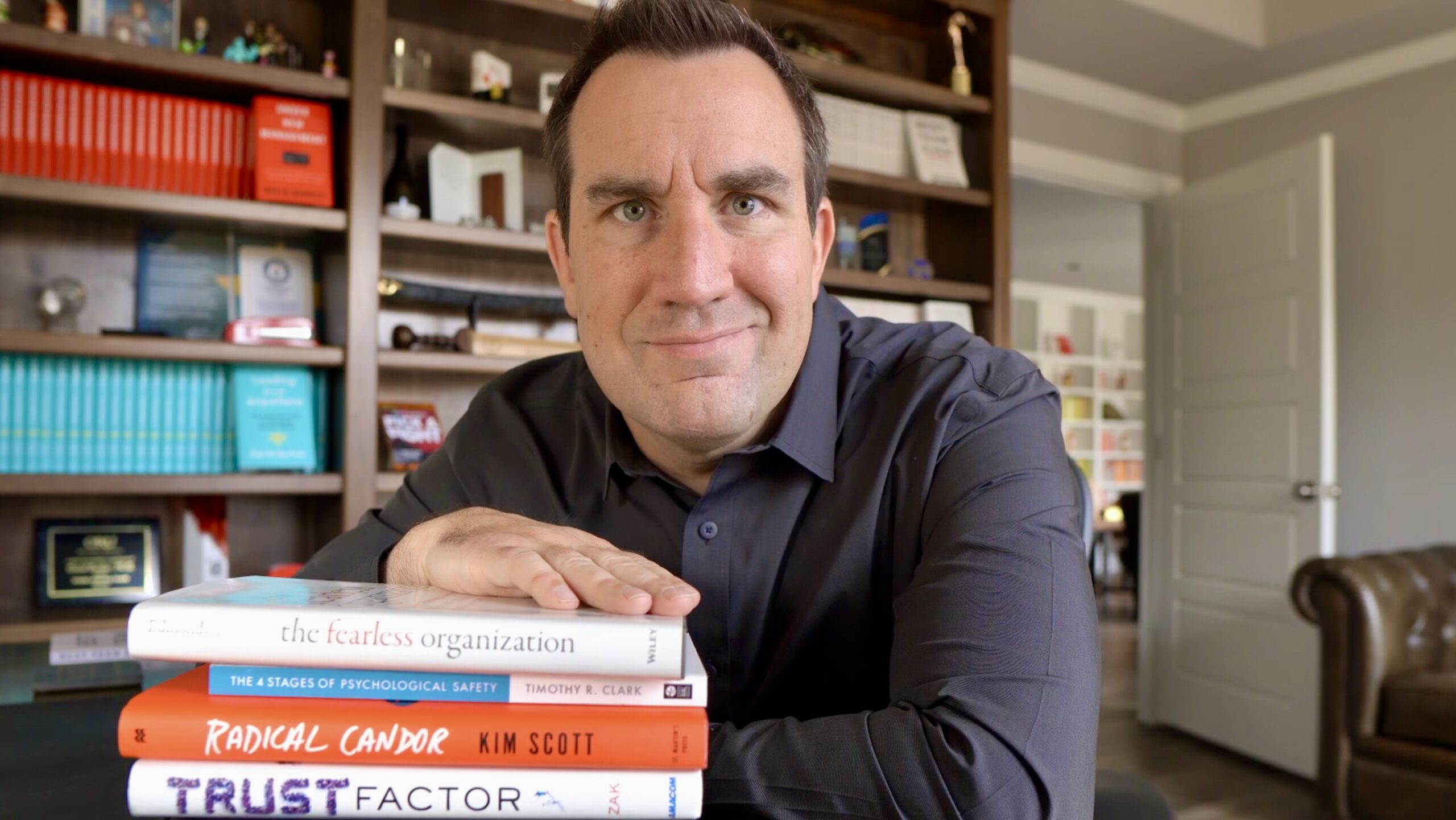
1. Trust Factor by Paul Zak
This book offers one of the clearest explanations of why trust matters to business performance—and what actually drives it. Zak draws from neuroscience to map out eight behaviors that build trust and quantifies their impact on engagement and productivity.
What stood out to me was how measurable trust becomes in Zak’s framework. It moves trust from a fuzzy value to a leader’s responsibility—with habits and systems that reinforce it.
2. The Speed of Trust by Stephen M.R. Covey
Covey’s central insight is that trust isn’t just a virtue—it’s a force multiplier. Teams with high trust move faster, innovate more, and spend less time second-guessing or politicking. In contrast, low-trust environments create friction everywhere.
What I appreciated most is how Covey breaks trust down into credibility and behavior—and then gives leaders language to repair it when it breaks.
3. How To Trust And Be Trusted by Rachel Botsman
Botsman tackles trust from a cultural and systems-level lens. She explores how our society is shifting from institutional trust to distributed trust—and what that means for how we lead, collaborate, and connect. I’ve adopted Botsman’s definition of trust, “a confident relationship with the unknown,” as my chosen definition in most circumstances.
Technically, it’s not a book–it’s audio only. It’s a great listen and a mindset shift around trust. But it’s essential reading if you’re trying to navigate trust across generations, remote teams, or increasingly skeptical workplaces.
4. The Fearless Organization by Amy Edmondson
While not explicitly a book on trust, Edmondson’s deep dive into psychological safety is foundational. She shows how psychological safety fuels learning, performance, and innovation—and how a lack of it erodes trust across every level of the org chart.
This book helped me recognize that safety is the precondition for trust. You can’t have one without the other.
5. The 4 Stages of Psychological Safety by Timothy R. Clark
Building on Edmondson’s work, Clark outlines a progression that every team member moves through—from feeling included, to feeling safe enough to learn, contribute, and eventually challenge the status quo.
It’s one of the most useful frameworks I’ve found for diagnosing where trust is breaking down—and how to meet people where they are in rebuilding it.
6. The Trust Edge by David Horsager
Horsager positions trust as the core advantage in leadership, branding, and execution. His “8 Pillars of Trust” offer a balanced mix of character and competence, giving leaders a holistic way to lead with integrity and consistency.
What I like most is the practicality—each pillar comes with habits and disciplines that leaders can adopt immediately.
7. Radical Candor by Kim Scott
Trust isn’t just about support—it’s also about challenge. Scott makes the case that the most trusted leaders are the ones who care personally and challenge directly. Without one or the other, trust breaks down.
It’s a powerful reminder that candor isn’t cruel. In fact, radical candor is often the highest form of respect.
Final Thought
These books on trust aren’t just good reads—they’re guides for building teams where people feel safe, valued, and empowered to perform. If you’re trying to improve culture, collaboration, or performance, trust is the place to start.
Pick the one that stands out—and start building.
If you enjoyed this article, check out my other best book lists:
- The 14 Best Leadership Books That Actually Changed My Thinking
- The 8 Best Teamwork Books That Actually Improve Collaboration
- The 5 Best Books on Change Management (That Actually Help You Lead Through It)
- The 6 Best Books on Psychological Safety (That Actually Help Teams Thrive)
About the author
David Burkus is an organizational psychologist, keynote speaker, and bestselling author of five books on leadership and teamwork.