By:

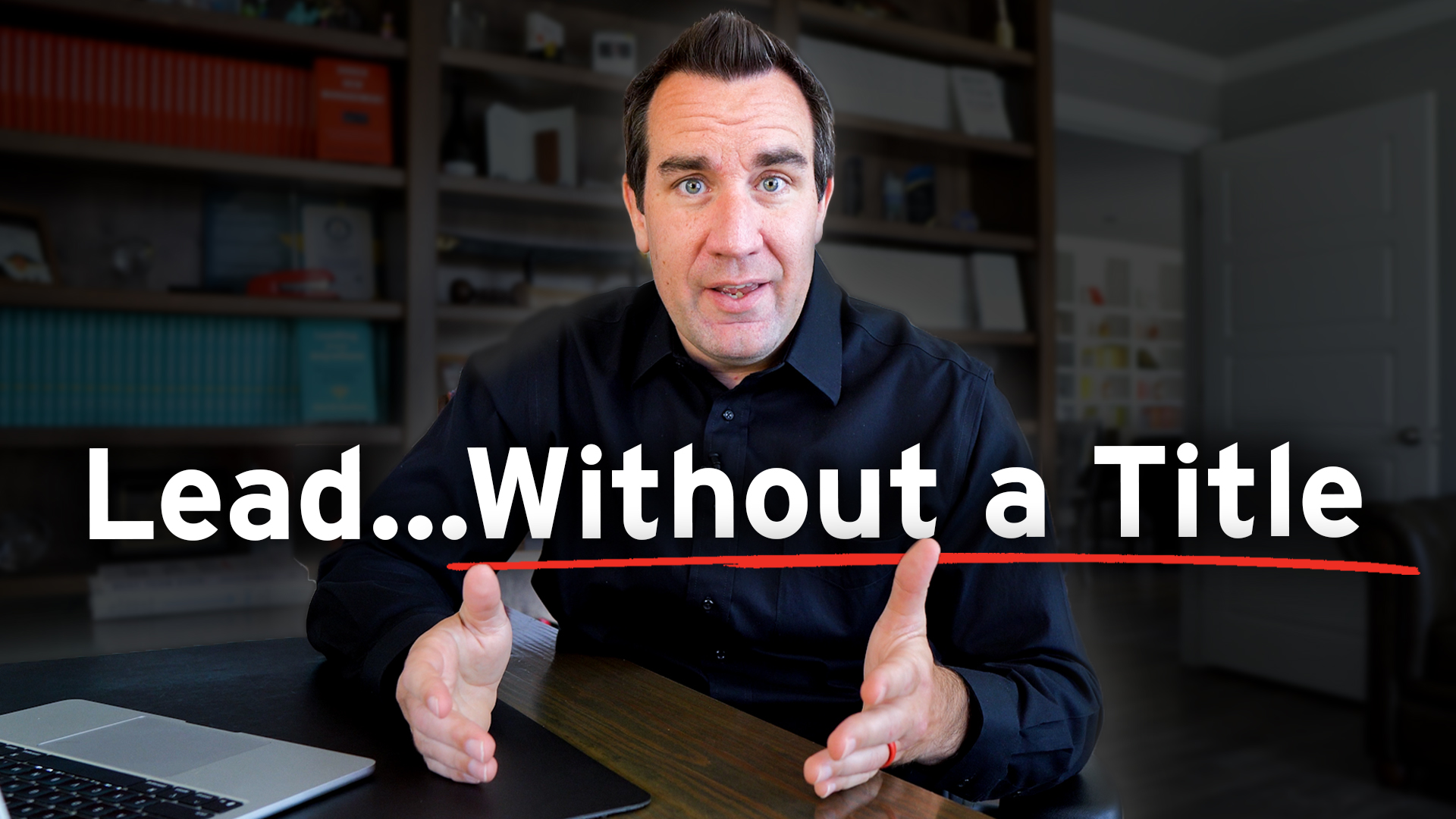
Most people think of leadership as something that gets assigned. You get the promotion, the fancy office, the team — and suddenly you’re a leader. But researchers have been pushing back on that assumption for decades. The general consensus? You don’t need formal authority to take on a leadership role. You can lead without a title — and doing so might be the single best investment you make in your career.
Maybe that looks like stepping up to lead a small project team. Maybe it means volunteering for the assignment nobody else wants. Or maybe it’s becoming the person who rallies a demoralized team when no one else will. There are countless ways to lead informally, but that doesn’t mean it comes without real challenges. The rewards are significant — but so are the risks. And understanding both is the key to doing it well.
Why Bother Leading Without Authority?
The most obvious question is: why do more work if you’re not being paid for it? Why stick your neck out when nobody’s asking you to?
Here’s the honest answer. Stepping into a leadership role without a title is like a free trial run. You get to see what skills you actually need. You get to start developing them. And you get to try on the leadership mantle without bearing full responsibility for your team’s performance or failure. Research shows that employees who take initiative to improve things—even things they’re not directly responsible for—experience greater career growth than those who don’t. And this behavior isn’t just linked to faster promotions or bigger opportunities. It’s also tied to a deeper sense of engagement and fulfillment at work.
That last point matters more than people realize. There’s something deeply satisfying about getting a team unstuck, rallying people around a shared goal, or making a project better than it would have been without you. That’s impact. And you don’t need a corner office to feel it.
The Part Most Advice Glosses Over
Here’s where most leadership advice falls short. Leading without a title has real downsides — and pretending otherwise doesn’t help anyone.
The most obvious one: it’s extra work you’re not being compensated for. When you become the person who resolves the conflict, coordinates the communication, or boosts morale, that’s real labor. It’s hard. There’s also social risk. Not everyone appreciates the colleague who starts acting like they’re in charge. We’ve all seen the person who jumps into a meeting and starts delivering a TED talk nobody asked for. Don’t be that person.
And here’s the deeper challenge. When you don’t have formal authority, you can’t tell people what to do. When you’re actually the boss, people comply because they have to. But when you don’t have the title, people only follow because they want to — which means you have to do the harder work of becoming someone worth following. Researchers call this the difference between position power and personal power. Position power comes from the title. Personal power comes from expertise, relationships, and trustworthiness. The difficult thing is that personal power takes much longer to build — and it can be lost in a moment.
So no, leading without a title isn’t an easy fast track to promotion. It’s a decision that involves risk. The question is whether the reward is worth it.
Five Ways to Lead Without a Title
If you’ve decided the answer is yes, here’s how to do it effectively.
- Lead with expertise, not ego. The fastest way to earn informal authority is to be genuinely, visibly good at something. When your teammates realize you’re the one who’s done the research, who’s prepared, who consistently has the answer — they naturally start coming to you. You don’t have to announce yourself as the leader. Your expertise will do that for you.
The key is finding the intersection between what you can offer and what your team keeps struggling with. What questions keep coming up? What friction won’t go away? That overlap is where your informal authority lives. But there’s a fine line between expertise and ego. You’re sharing knowledge to serve the team, not to prove how smart you are. The first earns respect. The second earns eye rolls. - Build relationships before you need them. Influence is relational. When you try to get a team to follow your direction, there’s really only one question on their minds: Do I trust this person? If you haven’t built that trust before the moment arrives, you’re already behind. And this doesn’t just apply to your immediate team. Research shows the people who build the most informal authority do so by building relationships across the entire organization. Block off 30 minutes each week to have a conversation with someone outside your immediate circle. Look for ways to connect two people who don’t know each other — a five-minute introduction can create enormous value. Or simply volunteer to help with projects and meetings that aren’t technically yours. These feel like small gestures, but they compound over time. When it’s finally time to step up, you’ll have something real to stand on.
- Clarify the goal, not the roles. One of the most common mistakes informal leaders make is mimicking what an actual manager does — assigning tasks, checking in on people, positioning themselves at the top of a hierarchy that doesn’t exist. That backfires almost every time. Instead, make the goal relentlessly clear. When everyone is aligned on what success looks like, it takes far less effort to get people moving in the same direction. The goal does the heavy lifting for you. In practice, this might mean being the person who steps up during a kickoff meeting to make sure everyone understands why the project matters. Or it might mean resolving conflicts by pointing people back to the shared objective instead of their individual agendas. A few simple questions can reorient an entire room: What’s the most important thing we need to focus on? Do we all know what success looks like? Are we solving the right problem? When people hear those questions consistently from the same person, they start to see that person as the real leader.
- Model the behavior you want to see. People will pay attention to what you do far more than they’ll listen to what you say. If you talk about accountability but miss deadlines, or preach collaboration but bail when things get hard, you’re undercutting all of your informal authority. This is also where the “no title” disadvantage becomes an advantage. Because people see you as a peer, they’re more likely to view your behavior as authentic and attainable. When a boss tells you to be more collaborative, it feels like a directive. When a peer models collaborative behavior, it’s an invitation. And managers notice too — when you’re consistently setting the standard, they see someone who’s ready for the next opportunity.
- Make others look good. This might sound counterintuitive, especially when you’re the one trying to get noticed and promoted. But the leaders who earn the most loyalty — and the most visibility — are the ones working to make everyone around them better. They share credit widely. They amplify other people’s ideas in meetings. They ask, “How can I help you succeed?” and actually mean it. When you make other people look good, two things happen. First, they trust you. They believe you genuinely have their best interests in mind. Second, everyone notices — including the managers and senior leaders who decide who’s ready for more responsibility.
The Title Will Follow
Do these five things consistently and something interesting happens. People start to notice you more often. They look for you in meetings. They refer others to you as “someone you should talk to.” None of this requires a title.
The title will come. And if it doesn’t come right away, you’re at least in a position to ask for it. But when it does arrive, it will just be the organization putting in writing what everyone already knows — you’re a leader.

About the author
David Burkus is an organizational psychologist, keynote speaker, and bestselling author of five books on leadership and teamwork.