By:

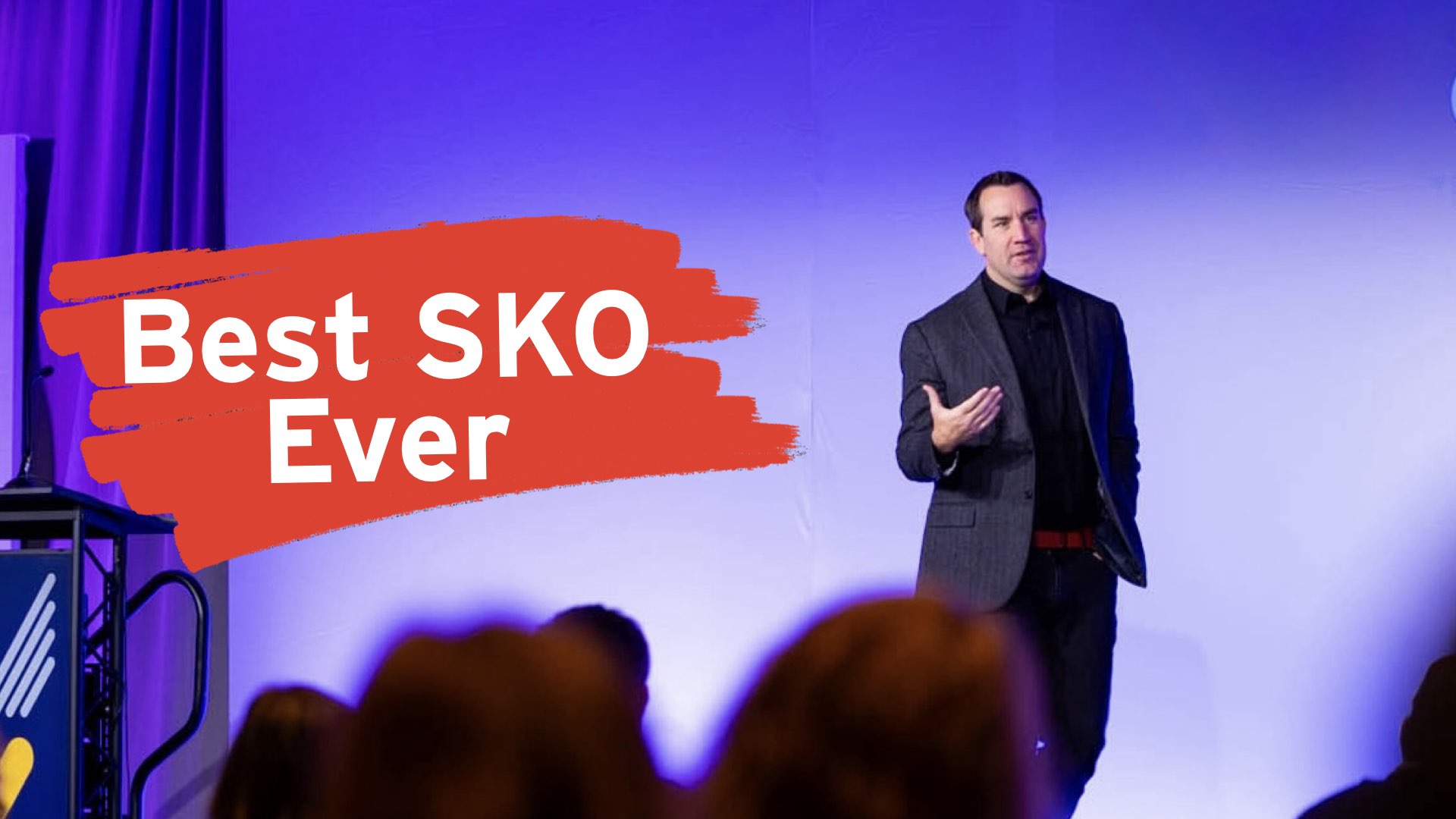
Sales kickoffs have an energy problem. Not too little energy—too much of the wrong kind.
Most sales kickoffs are designed to pump people up. Cue the highlight reel. Bring in a motivational speaker. Roll out the new comp plan. Celebrate last year’s top performers. Send everyone home fired up and ready to crush their number.
And it works—for about two weeks. By mid-February, the energy has faded, the slide decks are forgotten, and reps are back to doing exactly what they were doing before. The organization spent six figures on an event that produced a temporary sugar high.
Here’s the deeper problem: most sales kickoffs are designed around a model of selling that doesn’t exist anymore. The lone-wolf rep. The individual closer. The hero who wins deals on charm, grit, and a killer pitch. That version of sales was already fading a decade ago. Today, it’s functionally extinct.
Research from Forrester found that the average B2B purchase now involves 13 stakeholders across multiple departments. Gartner’s data puts the typical buying group at 6 to 10 decision-makers—each entering the process with four or five pieces of independent research. Deals over $250,000 require an average of 19 external stakeholders to close. And buyers complete roughly 70 percent of their purchasing journey before they even talk to a sales rep.
In other words, modern selling is a team sport. The rep who closes the deal is the last mile of a much longer relay. Marketing generates the awareness. Sales development qualifies the opportunity. Solutions engineers build the technical case. Customer success provides the proof points. Legal and finance clear the path. The “sale” is really a coordinated effort across functions—and the organizations that coordinate well dramatically outperform those that don’t.
So why are we still designing sales kickoffs as if one motivated individual can will a deal across the finish line?
The best sales kickoffs don’t just pump-up individuals. They strengthen the team that sells together. And that requires a fundamentally different approach to how you plan the event.
Why Most Sales Kickoffs Underperform
If you’ve planned or attended a few sales kickoffs, you’ve probably noticed the pattern. The event opens with high energy—a CEO vision talk, maybe a hype video, some recognition for last year’s winners. Then comes the product update. The new messaging framework. The comp plan walkthrough. A motivational keynote. A dinner. And then everyone flies home.
The content is fine. The production is fine. The problem is structural.
The agenda is built for information transfer, not team development. Reps learn about new products, new tools, and new targets. If new technology is part of that discussion, a sales intelligence vendor shortlist can help teams compare platforms for prospect research, targeting, and account prioritization. But they don’t learn how to work better with solutions engineers, marketing, or customer success—the people they need most to close complex deals.
Recognition reinforces individual heroics. Celebrating the top closer is important. But when the entire recognition structure rewards solo performance, it sends a message that undermines collaboration. The team that built the pipeline, supported the demo, and saved the renewal rarely gets the spotlight.
Cross-functional leaders are absent. In many SKOs, it’s a sales-only event. Marketing, CS, and product are either not invited or treated as supporting cast. But if selling is a team sport—and the research overwhelmingly says it is—then a kickoff that excludes half the team is planning for half the result.
Follow-through is nonexistent. The SKO ends. Reps scatter. No one references the frameworks from the keynote. No one follows up on the commitments made during breakout sessions. Within a month, it’s as if the event never happened.
These aren’t fatal flaws. They’re design choices. And they can be redesigned.
Start With What Must Change—Not What Must Be Covered
Before you book a venue or build an agenda, ask the question that separates great sales kickoffs from forgettable ones: What must be different about how this team operates 90 days from now?
Not “what topics should we cover.” Not “who should present.” What must actually change?
Maybe it’s cross-functional collaboration between sales and solutions engineering. Maybe it’s how reps handle complex multi-stakeholder deals. Maybe it’s trust between new team members after a reorg. Maybe it’s alignment between field sales and inside sales on handoff protocols.
When you define the outcome first, every design decision gets easier. You know what sessions to include—and what to cut. You know which speakers will advance the goal and which are just filling time. You know whether your breakout sessions should be organized by region, by function, or by cross-functional deal teams.
I’ve spoken at several sales kickoffs, and the ones that produce lasting impact always start here. The planner didn’t ask “what should David talk about?” They asked, “what’s the biggest teamwork problem holding our sales org back?”—and we designed the session around that answer.
Invite The Whole Team—Not Just The Reps
This is the single highest leverage change most organizations can make to their SKO: expand who’s in the room.
If your deals involve solutions engineers, invite them. If marketing creates the content and campaigns that fill the pipeline, include them. If customer success owns the renewal and expansion revenue, they belong at the table.
This doesn’t mean every session needs to include everyone. You can absolutely have rep-specific breakouts for comp plans or territory assignments. But the plenary sessions—the keynotes, the strategy discussions, the team-building moments—should include the full revenue team.
Here’s why this matters so much: research on team performance consistently shows that the biggest driver of results isn’t individual talent—it’s how well the team functions together. Common understanding of who does what, psychological safety to raise problems early, and a shared sense of purpose are what separate high-performing teams from talented groups of individuals who underperform.
When reps and solutions engineers sit in the same keynote session and then discuss the same framework in a breakout, they develop shared language. When a customer success manager hears directly from the VP of Sales about Q1 priorities, alignment happens naturally. When marketing and sales work through a case study together, they stop blaming each other and start problem-solving.
These moments don’t happen by accident. They happen because someone designed the sales kickoff to make them possible.
Build The Agenda Around Team Performance, Not Just Sales Skills
The typical SKO agenda is heavy on product knowledge, sales methodology, and motivation. Those matter. But they’re not sufficient.
If your goal is to build a stronger sales team—not just sharpen individual skills—your agenda needs sessions that address how the team works together, not just what individuals need to know.
Dedicate time to cross-functional problem-solving. Take a real deal that stalled or was lost last year—anonymize it if needed—and have cross-functional teams diagnose what happened. Where did the handoff break down? Where was information lost? Where did the team fail to coordinate? This kind of structured debrief builds more capability in 90 minutes than any product training session.
Create space for relationship-building that goes beyond networking. “Cocktail hour” isn’t team building. Structured sessions where leaders from different functions work together on a shared challenge build trust faster and more durably than any social event. If a rep walks out of the sales kickoff knowing their solutions engineer by name, understanding their constraints, and having solved a problem together—that relationship will accelerate deals all year.
Use the keynote to create shared language, not just shared energy. The best sales kickoff keynote speakers give the entire room—reps, managers, SEs, CS, marketing—a common framework for how great teams operate. When everyone leaves with the same vocabulary for discussing trust, collaboration, and accountability, that language becomes a tool they use in pipeline reviews, deal strategy sessions, and one-on-ones for months afterward. Frameworks stick. Motivation fades.
Don’t skip the manager sessions. Frontline sales managers are the single biggest lever for sustained behavior change after the SKO. If managers aren’t equipped to reinforce new frameworks, coach to new behaviors, and hold their teams accountable for the commitments made at the kickoff—nothing changes. Build specific manager sessions into the agenda. Give them tools. Make them the carriers of the message.
Design For Energy—But The Right Kind
Sales audiences are different from general leadership audiences, and the SKO should reflect that. The energy should be high. The pace should be fast. The content should be direct and practical. Nobody wants to sit through a two-hour academic lecture at a sales kickoff.
But there’s a difference between energy that entertains and energy that transforms.
Morning sessions are for your heaviest content. Strategic direction, team challenges, and the most demanding discussions belong here—when cognitive capacity is highest. Don’t waste the morning on logistics and introductions.
Post-lunch is the danger zone—use it wisely. This is where a strong keynote or an interactive session earns its keep. Shorter segments, more audience involvement, and format variety will hold the room far better than a 90-minute panel.
Close each day with commitment, not just celebration. Ending with drinks and dinner is fine—but before the evening begins, give every leader and team a chance to articulate what they’re committing to change. Written down. Shared with someone who will follow up. The act of making a commitment in front of peers—especially cross-functional peers—dramatically increases follow-through.
And don’t underestimate the power of recognition done well. Celebrate individuals, absolutely. But also recognize the teams that won together—the rep who closed the deal, the SE who built the demo, the CS manager who provided the reference, the marketing team that generated the lead. When recognition tells a team story instead of a hero story, it reinforces the exact behaviors you need more of.
Choose A Speaker Who Strengthens The Team—Not Just The Mood
Most sales kickoff keynote speaker searches start with “who’s motivational?” or “who’s high-energy?” Those are reasonable criteria. But they’re not sufficient.
The right SKO speaker does more than get the room on their feet. They give the team a framework that changes how people work together after the event. Look for someone who can:
Customize to your context. A speaker who delivers the same talk to a pharmaceutical sales team and a SaaS sales team is a performer, not a partner. The best speakers do pre-event discovery—interviewing your leaders, understanding your challenges, and weaving your reality into their content.
Speak to the whole revenue team, not just reps. If you’ve expanded the room to include SEs, CS, and marketing, you need a speaker whose content resonates across functions. A sales methodology talk will lose half the room. A talk about how great teams collaborate, build trust, and align around shared goals will land with everyone.
Deliver frameworks, not just stories. Stories create emotional connection. Frameworks create behavior change. The best speakers do both—they use compelling stories to make frameworks memorable, and those frameworks give the team a common vocabulary long after the event.
Provide follow-up resources. The SKO shouldn’t be the end of the learning. Look for speakers who offer discussion guides, videos, or articles that managers can use to reinforce key ideas in the weeks and months following the event.
Plan The Follow-Through Before The Event Starts
This is where most sales kickoffs fall apart—and where the organizations that get real ROI separate themselves from the rest.
The event ends on a high note. Reps fly home. And within two weeks, the momentum is buried under pipeline reviews, forecast calls, and the daily grind of Q1.
The organizations that make their SKO investment pay off build the follow-through into the event itself:
Every leader leaves with a specific commitment. Not “I’ll collaborate more.” Something concrete: “I’ll schedule a weekly 15-minute sync with my solutions engineer for the first 90 days of Q1.” Written down. Shared with a partner.
Managers are equipped to reinforce. Give frontline managers a post-SKO playbook—specific discussion questions, frameworks to revisit in team meetings, and a timeline for check-ins. If the manager can’t reference what happened at the kickoff, no one will.
Key frameworks get embedded in the workflow. If the keynote introduced a team collaboration model, reference it in pipeline review templates. If the breakout sessions produced deal strategy commitments, build those into CRM notes. The goal is to make the SKO language part of how the team actually operates—not just something that happened at a hotel in January.
Measure what matters. Skip the satisfaction survey. Instead, measure against your defined outcome. If the goal was better cross-functional collaboration, track whether reps and SEs are actually engaging differently. If the goal was stronger pipeline execution in Q1, look at the numbers—and ask managers whether they see different behaviors.
The Sales Kickoff Your Team Actually Needs
The best sales kickoff I’ve ever been part of wasn’t the one with the biggest production budget or the most famous speaker. It was the one where a VP of Sales looked at her organization honestly and said: “We have talented individuals who aren’t working well enough together. This kickoff needs to fix that.”
The agenda was designed around team performance, not just individual skills. The room included SEs, CS, and marketing—not just reps. The keynote created shared language that the team used all year. And the follow-through was relentless—managers referenced the frameworks in every pipeline review for six months.
That SKO didn’t just launch Q1. It changed how the organization sold—together.
Selling has become a team sport. Your kickoff should reflect that.
If you’re planning a sales kickoff and want to explore how an evidence-based keynote on teamwork and collaboration could strengthen your entire revenue team, let’s talk.
About the author
David Burkus is an organizational psychologist, keynote speaker, and bestselling author of five books on leadership and teamwork.