By:

Change is constant. And for leaders, that means change management isn’t a skill you tap into once—it’s something you do every day.
But most of the advice on navigating change is either overly rigid or impossibly vague.
The best books on change management aren’t just about creating plans—they’re about understanding people.
Because every change, no matter how strategic, is ultimately emotional.
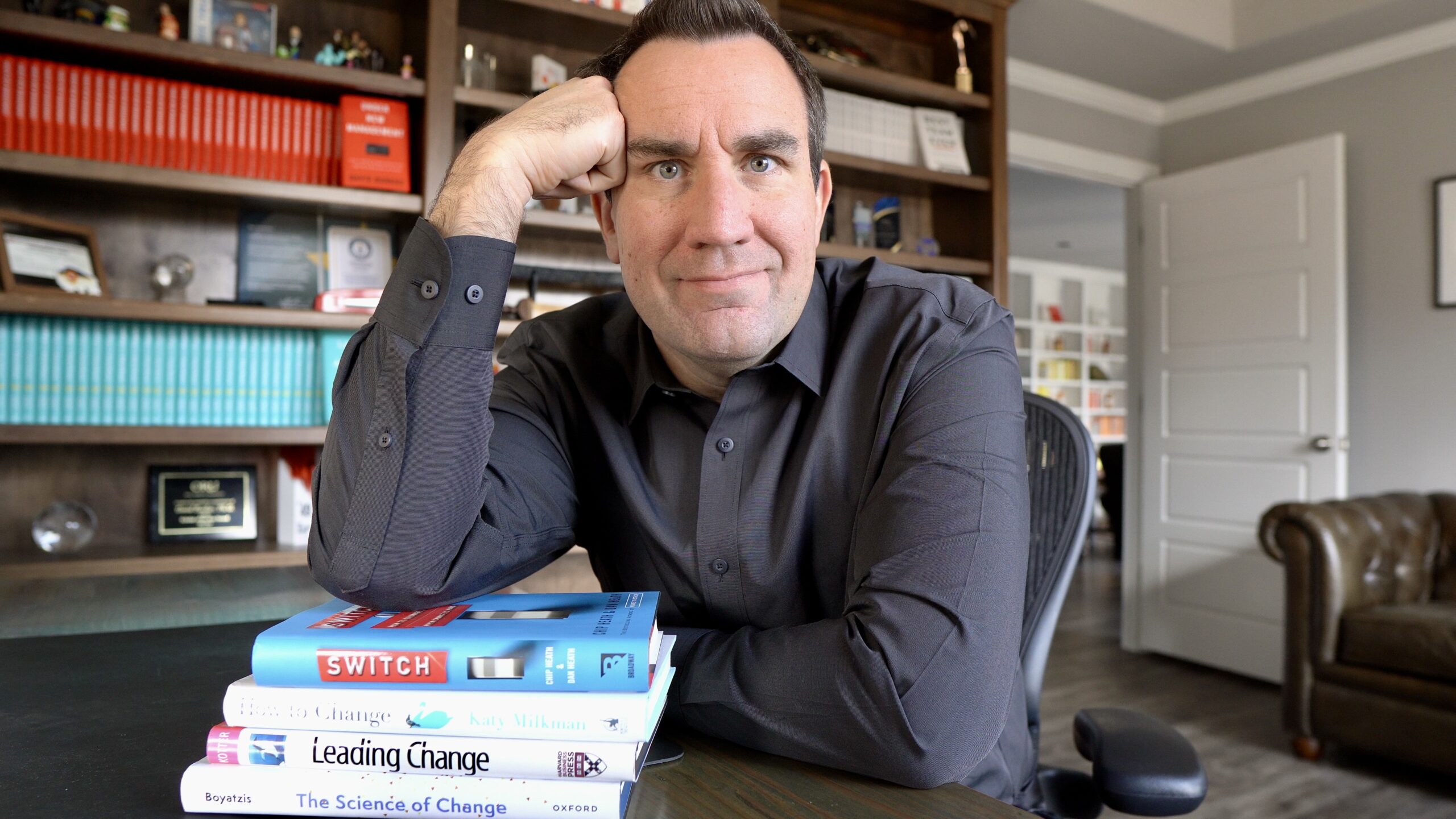
These five books on change—spanning strategy, psychology, identity, and mindset—changed how I think about leading through disruption. Whether you’re managing a transformation, launching a new initiative, or just trying to help your team adapt faster, these books offer the frameworks, science, and stories to help.
Best Books On Change
1. Leading Change by John Kotter
No list of books on change would be complete without Kotter. His 8-step process—first published decades ago—has become the default playbook for transformation across industries. And while the world has changed since the book came out, its core principles still hold up.
Kotter emphasizes that successful change isn’t about big speeches or vision statements. It’s about building a sequence of momentum: establishing urgency, forming a guiding coalition, creating short-term wins, and anchoring new behaviors in culture. When change fails, it’s often because leaders skip steps—or assume their urgency is shared.
What I found most helpful about this book wasn’t just the framework, but the clarity it provides around timing. Change doesn’t happen all at once. It unfolds. And knowing what comes next helps leaders avoid pushing too fast or giving up too soon.
If you’re new to change leadership or need a solid foundation, this is one of the most reliable books on change to start with.
2. Switch by Chip and Dan Heath
If Kotter gives you a process, the Heath brothers give you the psychology. “Switch” is a powerful book about behavior change—what drives it, what blocks it, and how to influence it at every level.
Their core metaphor is simple but sticky: every person is both a Rider (rational decision-maker) and an Elephant (emotional driver), walking along a Path (the environment around them). To create change, you need to do three things: direct the Rider, motivate the Elephant, and shape the Path.
This framework changed the way I approach resistance. Most of the time, we treat resistance as defiance or laziness. But the Heaths show how resistance is often a sign of ambiguity. People aren’t against the change—they just don’t know how to start, or they’re overwhelmed by the emotional toll of uncertainty.
What sets this apart from other books on change is how accessible and applicable it is. You can hand it to a frontline manager or a senior executive, and they’ll both walk away with tools they can use immediately.
3. How To Change by Katy Milkman
Milkman takes a behavioral science approach to change—but makes it incredibly accessible. Where “Switch” focuses on teams and systems, How to Change dives into how individuals form habits, overcome barriers, and stick to new behaviors.
Drawing from her research at Wharton and the Behavior Change for Good initiative, Milkman addresses the biggest psychological friction points: procrastination, forgetfulness, impulsivity, confidence, and more. But instead of generic advice, she provides science-backed tactics that leaders can use to help themselves and their teams.
One of my favorite takeaways is her idea of the “fresh start effect”—how people are more likely to change around calendar landmarks like birthdays, Mondays, or new quarters. It’s a small insight that can make a big difference when timing organizational initiatives.
Among all the recent books on change, Milkman’s stands out for its practical application at both the personal and team level.
4. The Science of Change by Richard Boyatzis
Boyatzis takes a deeper, more introspective approach to change. Instead of focusing on frameworks or systems, he explores the internal transformation that has to happen for change to be sustainable.
He draws on decades of neuroscience and emotional intelligence research to make the case that people change best when they feel safe, supported, and inspired—not when they feel pressured. In his view, the most effective change leaders are coaches, not commanders.
What I found especially helpful is Boyatzis’ emphasis on identity. Change doesn’t just alter what people do—it reshapes how they see themselves. And if you ignore that, you’ll run into resistance you can’t explain with logic.
If you’re looking for books on change that go beyond the surface and deal with long-term transformation, this is a must-read.
5. Master of Change by Brad Stulberg
Stulberg’s book flips the script entirely. Instead of teaching you how to manage change, he teaches you how to live inside it. His central idea is that change isn’t a temporary disruption—it’s a permanent condition. And if we want to thrive, we have to build capacity for dynamic stability.
He introduces the concept of “rugged flexibility”—the ability to stay grounded in your core while adapting fluidly to what comes next. It’s a blend of systems thinking, philosophy, and psychological resilience, delivered in short, digestible chapters.
For me, this book helped shift from control to coordination. So much of traditional change management is about trying to reduce uncertainty. But Stulberg encourages us to get better at navigating it—not just for our teams, but for ourselves.
Of all the books on change I’ve read, this one is the best at helping leaders rethink their relationship with change—not just how to lead others through it.
Final Thought
These five books on change management represent five different lenses: process, psychology, behavior, identity, and adaptability. Taken together, they offer a full-spectrum view of how change really works—inside teams and inside people.
And as any seasoned leader knows, the best change strategies don’t come from a single book. They come from layering insights, learning from resistance, and refining your approach over time.
If you’re looking to expand your leadership toolkit, any one of these books on change could be the spark that unlocks better conversations, smoother transitions, and stronger team buy-in. Pick the one that speaks to your current season of leadership. Read it with your next challenge in mind. And then put it into practice—because the work of leading change never really ends.
If you enjoyed this article, check out my other best book lists:
- The 14 Best Leadership Books That Actually Changed My Thinking
- The 8 Best Teamwork Books That Actually Improve Collaboration
- 7 Best Books on Trust That Actually Strengthen Teams
- The 6 Best Books on Psychological Safety (That Actually Help Teams Thrive)

About the author
David Burkus is an organizational psychologist, keynote speaker, and bestselling author of five books on leadership and teamwork.