By:

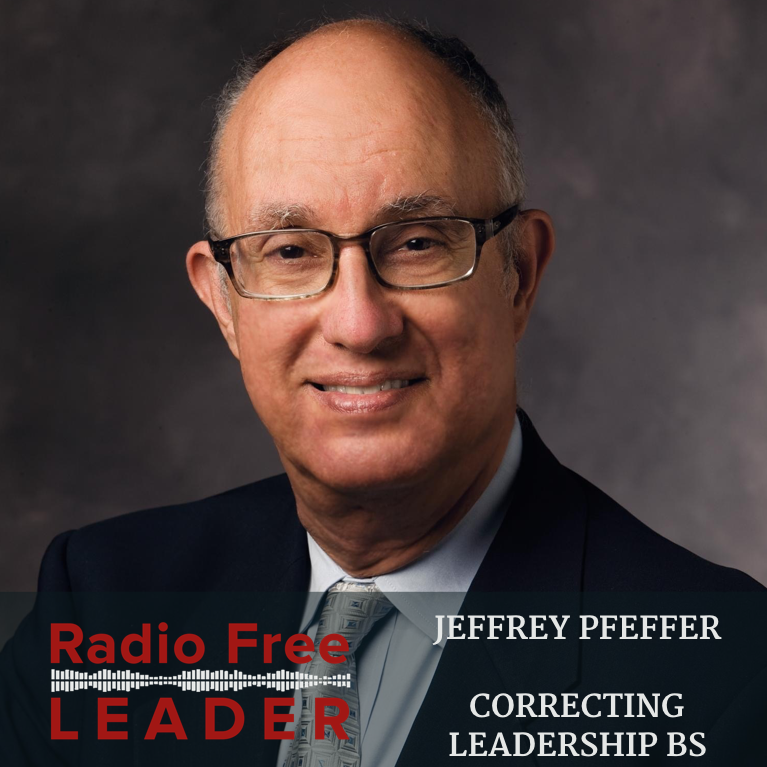
Jeffrey Pfeffer is the Thomas D. Dee II Professor of Organizational Behavior at the Graduate School of Business, Stanford University, where he has taught since 1979. In this interview, we take a hard-hitting dissection of the leadership industry and ways to make workplaces and careers work better.
[Listen in iTunes] [Listen on Stitcher]
In This episode, You’ll Learn:
- Where the multi-billion dollar leadership industry fails leaders
- The difference between what leaders should do and why leaders do
- How to have an evidence-based approach to leadership
Resources Mentioned In This Episode:
Enjoy This Episode?
If you enjoyed the show, please rate it on iTunes or Stitcher and write a brief review. That would really help get the word out and raise the visibility of the show.

About the author
David Burkus is an organizational psychologist, keynote speaker, and bestselling author of five books on leadership and teamwork.
I love that Prof. Pfeffer calls out BS, Nonsense, Hypocrisy in business – heck it pertains to the world at large, doesn’t it? I’ve seen it over and over where people are afraid to speak the truth/state the obvious/ because they don’t want to call attention to themselves, are risk averse, are yes-men. No one wants to tell Emperor he’s naked!
I totally agree! So glad you enjoyed the interview.
Hey David,
I just listened to your interview with David Pfeffer. As a bit of background, I don’t have a terminal degree in Psych or OD and am keenly aware of my need for learning as I (and others in my company) work in this field guiding, facilitating and coaching leaders. I’d also say that I/we are committed to understanding and teaching truth; our BS meters are constantly vibrating and we do our own weeding out of wheat from chaff. So I tuned in, hoping to learn more about what real leadership is and means, how it is practiced, etc.
I was, honestly, a bit disappointed. While Mr. Pfeffer’s points are valid – much of what passes for LD is unsupported or wishful thinking – he came across as “an academic,” (which I know he is) more concerned with being right than making a difference anywhere. That many leaders are narcissistic and successful, for example, or untruthful and successful (as he pointed out re. Mr. Trump, who is an idiot), is useless information. Yes, “experts” who say that a leader needs to be humble or truthful in order to be successful may be in error, but he seems to bypass the larger point, the philosophical point about what organizations are here to do and how leaders best make that happen. What’s taught about “how leaders ought to be” should not be evaluated based on whether, by doing so, the leader makes it to the top but by whether and how he or she creates and enables greater performance, a more successful organization and (my spin) a better world.
“In many ways, the work of a critic is easy. We risk very little, yet enjoy a position over those who offer up their work and their selves to our judgment. We thrive on negative criticism, which is fun to write and to read. But the bitter truth we critics must face, is that in the grand scheme of things, the average piece of junk is probably more meaningful than our criticism designating it so.” Anton Ego, Ratatouille.
Thanks, David. Will check out another one.
Rob, I totally see your point and agree with a lot of it. I look at Pfeffer’s work as a wake up call, however. Yes…I think there is a bigger philosophical point about what leaders SHOULD do…but right now those who advocate for “should” usually do so under the presumption that results will follow and ignore the examples that prove the opposite of their advice often also works. If we’re going to make progress advocating for leaders to make a better world, we have to address why the leaders who don’t care about that are also effective.