By:

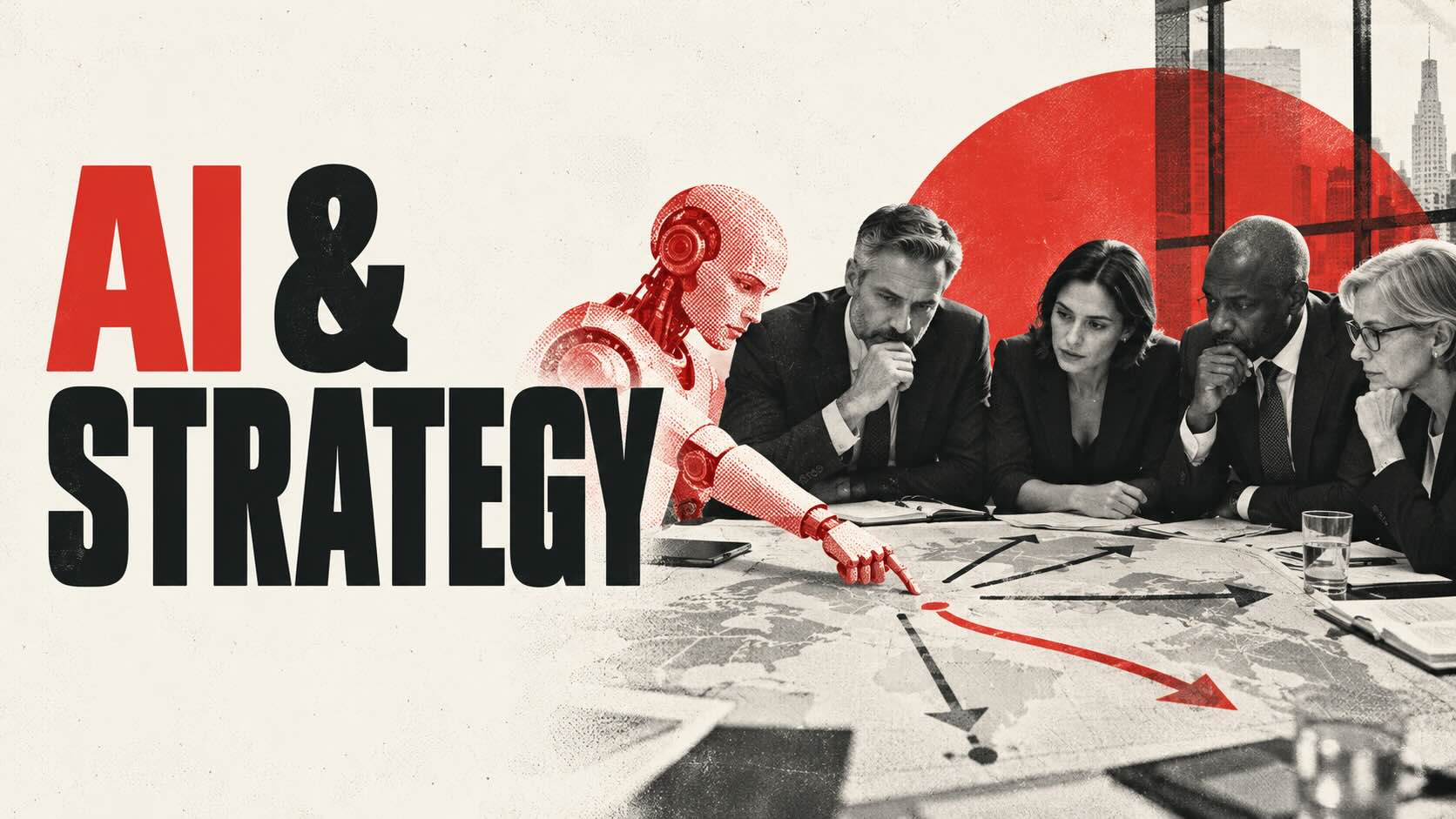
In 1961, a room full of brilliant people approved the Bay of Pigs invasion.
President Kennedy’s advisors weren’t fools. They were some of the most capable minds in American government. And yet they collectively endorsed a plan so flawed that it became one of the most studied foreign policy disasters of the twentieth century. Psychologist Irving Janis spent years trying to understand how that happened—how smart, experienced people in a room together could talk themselves into a catastrophic decision. He called the pattern groupthink: a cohesive group’s desire for unanimity overriding its members’ honest appraisal of the risks in front of them.
Janis’s most interesting finding wasn’t just that groupthink happens. It’s that the same group of advisors, one year later, made a dramatically better decision during the Cuban Missile Crisis—using the exact same people, but a deliberately different process. They built in structured dissent. They assigned people to argue positions they didn’t hold. They slowed down instead of rushing to consensus.
I open with this history because executive teams today are facing a strikingly similar test—just with a new variable in the room. According to The Conference Board’s 2026 C-Suite Outlook Survey, AI has moved from the margins of corporate strategy to its center; executives across industries now rank AI investment among their top priorities. But a recent industry survey found something more troubling underneath that enthusiasm: more than half of C-suite executives admit that adopting AI is straining their organization, and a similar majority acknowledge that many of their fellow leaders lack the fundamental knowledge to make sound strategic decisions about it.
In my work advising senior leadership teams on how they make high-stakes calls together, I’ve watched this play out directly. The tool is new. The psychological trap is exactly the one Janis described sixty years ago. That’s the real test of AI for strategy—not whether a leadership team adopts the technology, but whether it uses that technology in a way that sharpens judgment instead of quietly replacing it.
Two Ways AI For Strategy Can Go Wrong
Most advice about AI and leadership focuses on individual productivity—how a manager can use AI to draft faster, think more clearly, or offload administrative work. That’s useful, but it’s a different problem from the one senior leadership teams face when they’re making a genuinely high-stakes collective decision: whether to acquire a company, enter a new market, restructure the organization, or bet the next fiscal year on a strategic pivot.
At that level, AI introduces two specific risks that individual productivity use doesn’t.
AI can accelerate consensus instead of testing it. When an executive team already has an emerging preference—and most do, well before the “official” decision meeting—AI tools are remarkably good at generating supportive analysis for that preference. Ask an AI to build the case for an acquisition your team already wants to make, and it will build a compelling one. That’s not because the AI is biased toward yes. It’s because the framing of the prompt already contains the answer, and the AI is optimized to be helpful within that frame. In a room already vulnerable to groupthink, a tool that generates confident, well-organized support for the group’s existing lean doesn’t interrupt the pattern Janis described. It accelerates it—with better production values.
AI can trigger automation bias at exactly the wrong moment. Automation bias is the well-documented tendency to over-trust a system’s output simply because it’s authoritative and effortlessly produced. When a leadership team is uncertain—and high-stakes strategic decisions are, by definition, decisions made under uncertainty—there’s a strong pull toward outsourcing that discomfort to whatever tool seems most confident. AI is very good at sounding confident. It’s considerably less good at knowing what it doesn’t know. A leadership team that treats AI-generated analysis as a substitute for its own judgment, rather than an input into it, has replaced one groupthink risk with another.
Neither of these problems means your leadership team should avoid AI in strategic decisions. They mean the *way* you use it matters enormously—and most executive teams haven’t thought carefully about that yet.
Use AI To Force Dissent, Not Settle It
The single most effective countermeasure to groupthink that Janis identified—and the one that separated the Cuban Missile Crisis process from the Bay of Pigs process—was structured dissent. Not personality-driven disagreement, but a deliberate mechanism that required someone to challenge the emerging consensus regardless of what they personally believed.
Decades of research since Janis has confirmed how powerful this mechanism is. Social psychologist Charlan Nemeth’s research found that formally assigning someone to argue against the group’s developing position—the classic devil’s advocate role—increased the group’s consideration of alternative options substantially. The key insight from that research is that the intervention works even when everyone in the room knows the dissent is assigned rather than genuine.
Depersonalizing the challenge is what makes it safe to raise.
This is precisely where AI earns its place in the executive strategic process—not as a source of answers, but as a structured dissent mechanism your team can deploy without the political risk that usually keeps real dissent quiet in a room full of senior leaders.
Here’s how to build it into your process: once your leadership team has reached a working direction on a major decision—but before it’s finalized—assign AI the explicit role of challenging that direction. Not “what do you think of this plan?” but “argue as forcefully as you can against this plan. What are we not seeing? What would our sharpest competitor say? What assumption, if wrong, breaks the whole strategy?”
The output isn’t gospel. It’s ammunition for a conversation your team might otherwise avoid having. And because the pushback is coming from a tool rather than the CFO who’s worried about being the lone dissenting voice in the room, it’s dramatically easier for that CFO to say “actually, I’ve been thinking the same thing” once the AI has said it first.
Run An AI-Assisted Premortem Before You Decide
Decision researcher Gary Klein developed a technique specifically designed to counter the overconfidence that builds in cohesive groups as they approach a decision: the premortem. Before finalizing a plan, the team imagines that it’s a year in the future and the decision has failed catastrophically—then works backward to identify what caused the failure.
The technique works because of a subtle but important psychological shift. Asking “what could go wrong?” invites optimism bias—people naturally downplay risks they haven’t yet committed to. Asking “we already failed—why?” bypasses that bias by treating the failure as a foregone conclusion the team simply needs to explain.
AI is a genuinely useful partner for this exercise, for a specific reason: the premortem works best when participants generate their failure scenarios independently before discussing them as a group, which prevents the first person to speak from anchoring everyone else’s thinking. Before your next major strategic decision, have each member of your leadership team independently run the plan through an AI tool with the premortem prompt—”assume this decision failed completely one year from now, walk backward and explain why”—and bring their AI-generated failure scenarios into the room unshared. Compare them. The patterns that show up across multiple team members’ independent AI sessions are the risks worth taking seriously. The ones that show up in only one are worth a conversation, but not necessarily a strategy change.
This single practice—independent, AI-assisted premortems before group discussion—does more to counter groupthink in a strategic decision than almost anything else your leadership team can add to its process.
Keep Synthesis And Judgment Separate
There’s a meaningful difference between what AI is genuinely good at in the strategic decision process and what it should never be handed. Recent research on AI’s role at the executive level consistently points to the same conclusion: AI’s clearest value is in synthesis—compressing the pre-decision workload of scenario modeling, competitive analysis, and data synthesis that used to consume weeks of staff time. That’s real, and it’s valuable. It gives your leadership team more time to spend on the part of the decision that actually requires human judgment.
But synthesis is not the same as judgment. The weighing of values, risk tolerance, and organizational identity that goes into a genuinely difficult strategic call—the kind where reasonable, well-informed leaders could land in different places—is not a task to hand to a model, however articulate its output. The clearest sign your leadership team has blurred this line is when a strategic recommendation gets adopted primarily because “the analysis supports it,” without anyone being able to articulate the values tradeoff embedded in that recommendation.
Make the distinction explicit in how you run these meetings. AI does the synthesis. The leadership team does the judgment. And the team should be able to articulate, out loud, what values or priorities are driving their final call—not just what the data said.
Build The Practice Into Your Operating Rhythm
None of this works as a one-time exercise. The leadership teams that get real value from AI in strategic decision-making build these practices into how they operate, not into how they occasionally remember to operate under pressure.
A few structural changes make this durable:
Rotate the responsibility for running the AI-assisted dissent exercise before major decisions—don’t let it default to the same skeptical team member every time, which reintroduces the personality dynamics the technique is designed to avoid.
Set a standing rule: no major strategic decision gets finalized without an independent premortem round, AI-assisted or otherwise. Make it a checkpoint in your decision process, not an optional add-on that gets skipped when the team is confident.
And watch for the moment when your team starts treating AI output as a substitute for debate rather than fuel for it. That’s the signal that the tool has started working against you instead of for you—and it’s the exact moment Janis would recognize immediately, just with a different name on the failure.
The technology in the room has changed. The psychology hasn’t. The leadership teams that treat AI for strategy as a tool for sharpening debate—not settling it—will make measurably better decisions than the ones who assume a smarter tool automatically produces smarter judgment.
If you want to explore how a keynote or working session on strategic decision-making and team dynamics could strengthen how your senior leadership team operates, let’s talk.

About the author
David Burkus is an organizational psychologist, keynote speaker, and bestselling author of five books on leadership and teamwork.