By:

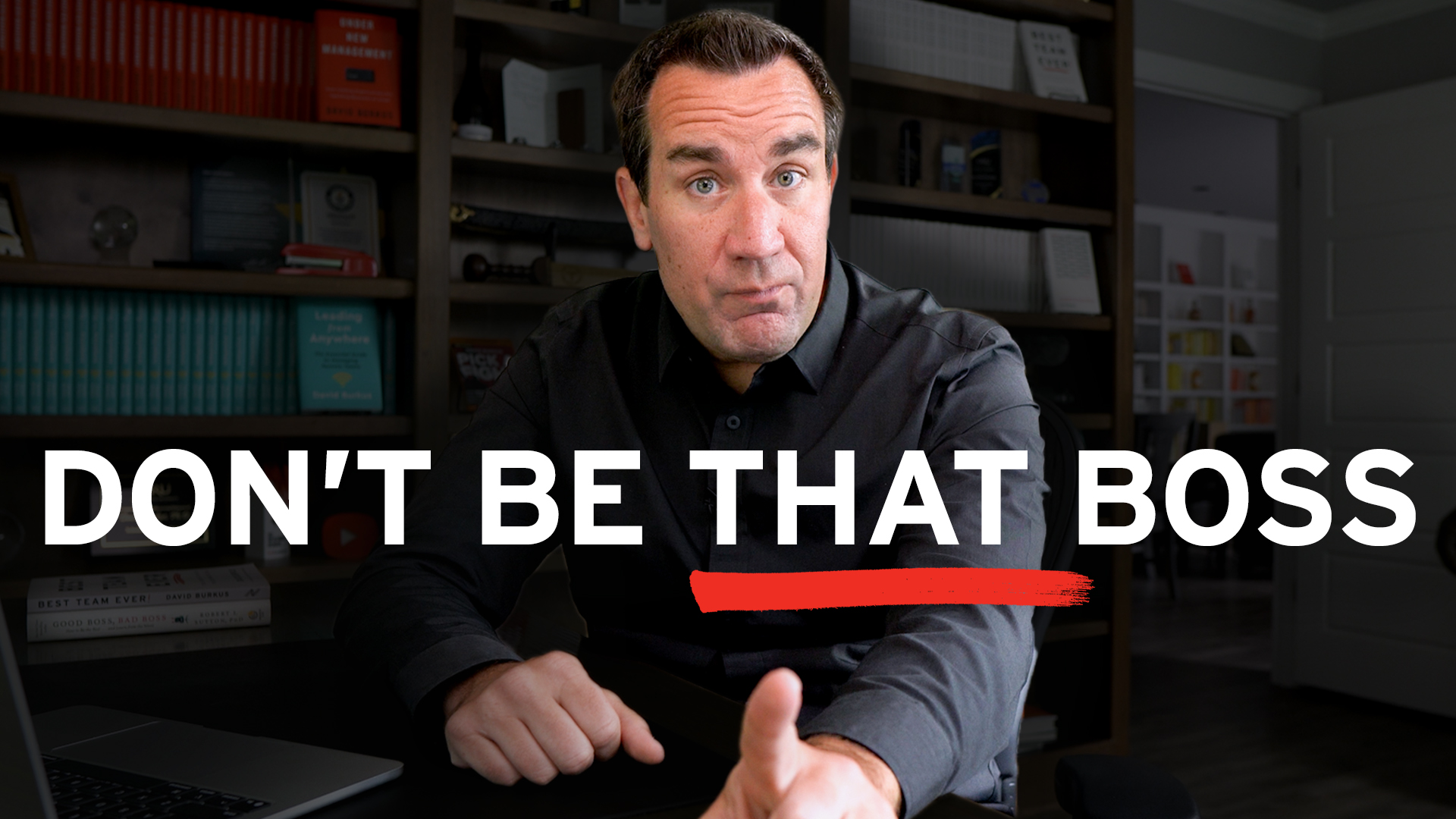
You’ve worked for a toxic leader before. Everyone has. The kind who drops a bold new priority in the all-hands meeting with zero warning, then reverses course two weeks later. The kind who runs on urgency, chaos, and the occasional full-blown fire drill — and seems to prefer it that way.
When you were an individual contributor, this was mostly a problem for happy hour. Something to vent about with coworkers before going home and forgetting about it. But somewhere along the way, you became a manager. And once that happened, the toxic leader above you stopped being someone else’s problem. Their chaos became your job.
You are now the buffer between the noise at the top and the people counting on you to help them do good work. Most managers don’t fully grasp that this is part of the role until they’re already standing in the middle of it, watching a good team get anxious, disengage, or quietly update their resumes.
Why The Usual Instincts Backfire
Faced with a toxic leader, most new managers default to one of two instincts, and both of them make things worse.
The first is to pass everything down. Every contradictory directive, every mood swing, every half-formed announcement gets relayed straight to the team, word for word, the moment it lands in your inbox. This feels honest. It feels transparent, even. But it isn’t management — it’s forwarding. You’ve turned yourself into a megaphone for the toxic leader’s chaos instead of a filter for it.
The second instinct runs the opposite direction: shield the team from everything. Smile through the reorg rumors. Absorb every contradictory memo without comment. Present a calm face no matter what’s actually happening upstairs. This feels protective. But your team is smart. They can read a room, and almost nothing erodes trust faster than a manager who pretends everything is fine when it clearly isn’t — or worse, one who enthusiastically oversells a plan everyone can see is falling apart.
Both approaches are trying to solve the same problem: how do I keep my team functional when leadership isn’t? And both fail for a reason grounded in actual research, not just intuition.
Middle managers occupy a genuinely unusual position in an organization. Research on the role, including work published in Harvard Business Review, points out that managers sit close enough to the daily work to know where the real problems live, but far enough from the weeds to still see the bigger picture. That combination is exactly what makes a manager capable of supporting a team through chaos — but only if they actually use it as a filter, rather than either dumping everything through or blocking everything out.
There’s also a cognitive cost to consider. When people feel anxious or uncertain, their brains genuinely have a harder time focusing. Research on stress and the prefrontal cortex — the part of the brain responsible for planning, judgment, and complex thinking — shows that stress measurably impairs its function. In other words, when a manager passes raw anxiety down to a team unfiltered, that team’s ability to actually do good work suffers. Not metaphorically. Neurologically.
So, the goal isn’t to relay everything, and it isn’t to hide everything. It’s to actively manage what moves between the top of the organization and the people you lead.
Five Ways To Protect Your Team From A Toxic Leader
Be the shock absorber, not the relay. Before you pass anything down, ask yourself a simple question: does my team need to know this right now? Does it change what they’re working on today? If not, you’re not protecting your team by staying silent — you’re just declining to let a toxic leader turn you into one too. Being a shock absorber means you don’t call an emergency meeting every time someone above you says something alarming. It means you buy your team the time and space to keep working while things sort themselves out.
Be transparent but know the limit. Filtering isn’t the same as hiding. Your team deserves honesty about uncertainty, about shifting priorities, about things that are genuinely changing. What they don’t need is your editorial commentary on how dysfunctional leadership is — even if it’s true. A simple, grounding line does more good than venting ever will: “I don’t have all the answers right now, but here’s what I do know, and here’s what we’re focusing on.”
Build a micro-culture. Your team’s sense of stability doesn’t have to trickle down from the top. Research on team environments consistently shows that the immediate team culture matters just as much as — sometimes more than — the broader organizational culture. That’s genuinely good news if you’re working under a toxic leader, because it means you have more control than it feels like. Build rituals. A weekly check-in that’s actually useful. A habit of documenting wins. A clear, shared understanding of how the team operates and treats each other. The noise above gets a lot less threatening when what’s around you feels solid.
Keep your team anchored to the work. Anxiety spreads fast, and when a toxic leader is being especially loud, your team will naturally want to fixate on the uncertainty instead of the work. Redirect them. What are we building? Who does it help? What does success look like this week? What’s actually within our control right now? These are the questions you need to be answering, especially when leadership can’t or won’t.
Know when to escalate. Protecting your team is not the same as enabling bad leadership. If you never push back, you become part of the dysfunction — and you deny senior leaders the feedback they need to actually improve. When you do escalate, be specific. Don’t say “you’re creating confusion.” Say something closer to: “When we received two contradictory directives on this project in the same week, it cost us three days of rework.” Framing feedback around business impact, rather than personal frustration, dramatically increases the odds it actually gets heard.
The Bottom Line
None of this makes working underneath a toxic leader easy. You’re still protecting from above, executing from below, and trying to hold onto your own sanity somewhere in the middle. That doesn’t change.
What does change is how much of that chaos actually reaches your team. The managers who act as a genuine buffer — filtering rather than forwarding, honest without being corrosive, anchored to the work rather than the drama — aren’t just making their own jobs more bearable. They’re the reason good teams survive, and sometimes even thrive, under bad leadership above them. That’s not a small thing. In a lot of organizations, it’s the difference between a team that holds together and one that quietly falls apart.

About the author
David Burkus is an organizational psychologist, keynote speaker, and bestselling author of five books on leadership and teamwork.