By:

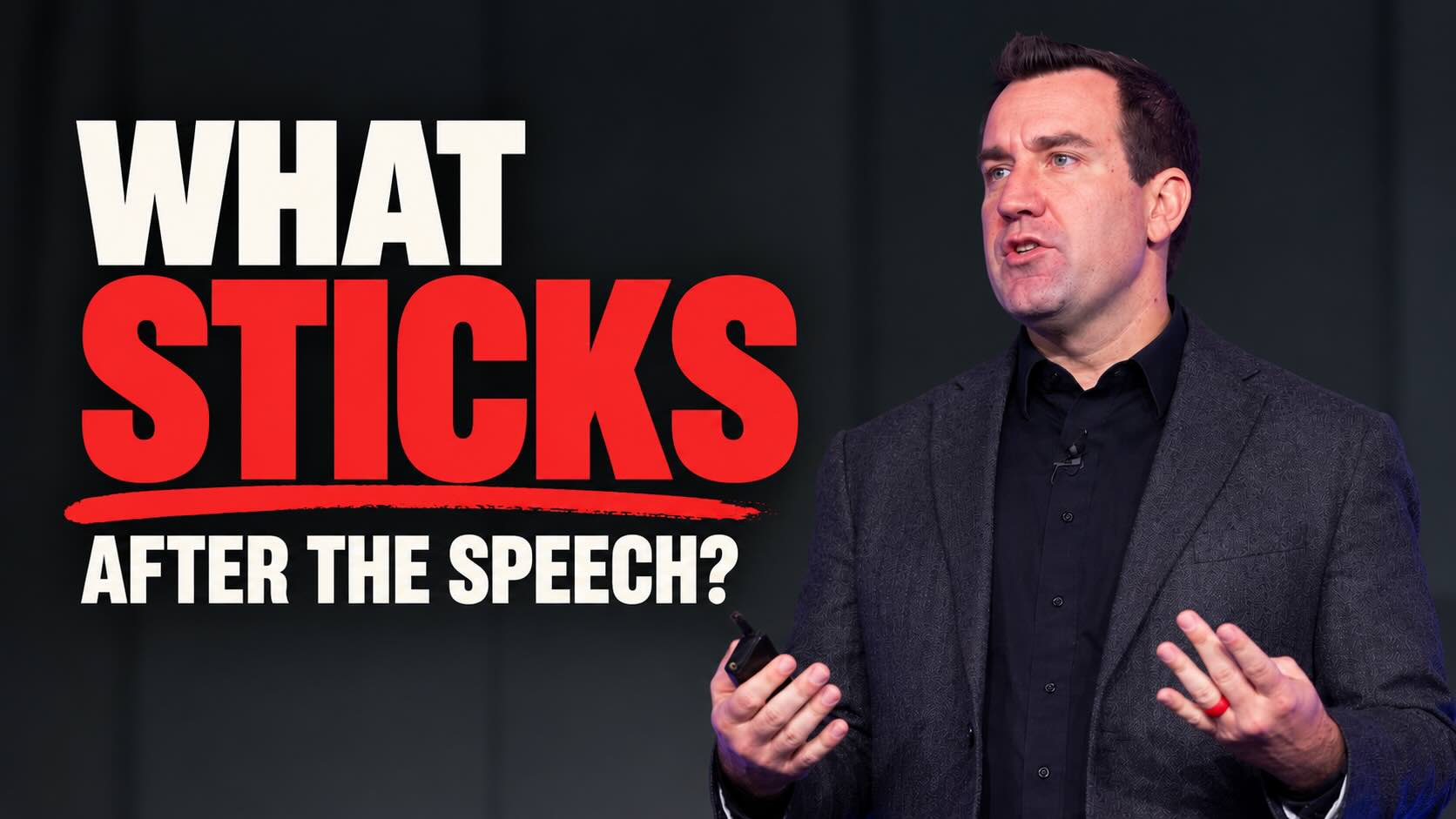
From the outside, most keynote speakers look the same.
Professional headshot. Confident bio. A page of client logos—Google, Microsoft, some Fortune 500 name that’s supposed to signal quality by association. A demo reel with a standing ovation at the end. If you’re planning a leadership event and start browsing speaker websites, you’ll notice within about ten minutes that they all promise essentially the same thing: an unforgettable experience that will transform how your people think.
Most of them will not deliver that. Not because they’re dishonest—because the packaging of a keynote speaker’s marketing tells you almost nothing about what actually happens when they’re on stage in front of your specific audience, addressing your specific challenges. The event planners who consistently choose well aren’t the ones with the best instincts for reading a bio page. They’re the ones who’ve learned to evaluate speakers on a completely different set of criteria than the ones the marketing is designed to showcase.
Here’s what that evaluation actually looks like.
1. Start With Your Event’s Outcome, Not A Speaker’s Name
The single biggest mistake in speaker selection happens before anyone looks at a single candidate: skipping straight to “who should we book” without first answering “what does this event need to accomplish.
A topic isn’t an outcome. “Leadership” isn’t an outcome. “Resilience” isn’t an outcome. An outcome sounds like: “Our senior leaders need a shared framework for having harder conversations about accountability” or “Our managers need to walk away believing that collaboration is a skill they can actually build, not a personality trait some people have and others don’t.
When you know the outcome, speaker selection stops being a popularity contest and becomes a matching exercise. You’re no longer asking “who’s impressive?” You’re asking “whose expertise, framework, and delivery style actually gets my audience to that specific outcome?” That question eliminates most of the field immediately—which is exactly what you want, because a shorter, better-matched list beats a long list of impressive-sounding options every time.
2. Understand Your Audience Before You Evaluate Any Speaker
A speaker who electrifies a sales team will often fall flat in front of a room of skeptical senior engineers. A speaker who resonates with a 200-person all-hands may feel like the wrong register entirely for a 40-person executive offsite. Audience fit isn’t a nice-to-have. It’s the difference between content that lands and content that gets politely applauded and immediately forgotten.
Before you evaluate a single speaker, get specific about who will actually be in the room: their seniority level, their industry, what they’re skeptical about, and what they’ve already heard a dozen times before. Leadership audiences in particular tend to be experienced and increasingly hard to impress with generic inspiration—they’ve sat through it before, and they know the difference between a speaker who is performing confidence and one who has genuine expertise to offer.
Should a keynote speaker have direct experience in your industry?
Not necessarily—but they need to understand your audience’s actual working reality. A speaker who has never set foot in a hospital can still speak powerfully to healthcare leaders if they’ve done the work to understand the specific pressures, language, and constraints of that environment. What matters more than industry pedigree is whether the speaker does genuine pre-event research, or simply swaps in your company name while delivering the same generic talk they give everywhere else.
3. Test For Evidence, Not Just Energy
This is where most speaker evaluations go wrong, and it’s worth being direct about why it matters.
A charismatic speaker can generate a standing ovation and a flood of enthusiastic feedback forms. None of that tells you whether anything will actually change once your team is back at their desks. Psychologist Hermann Ebbinghaus’s research on memory—since replicated many times over more than a century—found that people forget the large majority of new information within days unless something helps that information stick. Applied to a keynote: energy fades fast. A speaker whose entire value proposition is enthusiasm is competing directly against one of the most well-established findings in cognitive psychological: the forgetting curve.
What survives that forgetting curve is structure. A named framework. A model your team can reference in a meeting six months later without needing to remember the exact keynote that introduced it. This is the real test worth applying to every speaker candidate: does their content come from genuine research and a structured model, or does it lean primarily on personality and stagecraft? Both can be entertaining. Only one produces change that outlasts the applause.
This is exactly why I build my own keynotes around named frameworks—Best Team Ever, Click, The Trust Loop—rather than a loose collection of stories and observations. A framework gives an audience something to hold onto and apply long after the event, not just something to feel good about for an afternoon. When you’re evaluating any speaker, ask directly: what’s the framework? If they can’t answer that in one sentence, they may not have one.
4. Watch How They Customize
A speaker who delivers the identical talk to a healthcare system, a manufacturing plant, and a financial services firm—swapping only the company name on the opening slide—is a performer, not a partner. The speakers worth booking do real pre-event work: a discovery call with your team, questions about your specific challenges, and genuine incorporation of your context into the content itself.
Ask directly: what does your preparation process look like before an event? A strong answer includes a substantive conversation with your team weeks in advance, specific questions about your organization’s current priorities, and a willingness to adjust content based on what they learn—not a generic intake form. Experienced speakers make your job easier during this process, not harder. If a candidate seems annoyed by detailed questions about your audience, that’s useful information about how they’ll handle your actual event.
How far in advance should you book a keynote speaker for a leadership event?
For most leadership events, three to six months of lead time gives you room to secure a strong-fit speaker, complete a genuine discovery process, and allow the speaker to build content specific to your organization rather than pulling from a generic template. Major annual events with 150 or more attendees often benefit from booking even earlier, since the best speakers’ calendars fill months in advance.
5. Ask The Questions That Separate Real Fit From A Good Pitch
Every speaker’s website is designed to make them look like the right choice. The only way to get past the marketing is to ask questions that a well-prepared, genuinely qualified speaker will answer specifically—and that a mismatched speaker will answer vaguely.
A few worth asking every candidate directly:
- What will my audience be able to do differently after this keynote that they can’t do today?
- Can you walk me through how you’d customize this content specifically for our event and audience?
- What does your pre-event discovery process actually look like?
- Can I see a full, unedited recording of a recent live talk—not just a produced highlight reel?
- Can you provide two or three references from event planners, not just testimonials from your own website?
- What happens after the keynote ends? Do you offer any resources or follow-up that extend the impact?
The specificity of the answers matters more than the answers themselves. A speaker who responds with a clear, detailed process has done this seriously before. A speaker who responds with general reassurance is asking you to trust the packaging.
6. Consider The Full Engagement, Not Just The Sixty Minutes
The best keynote speakers understand that a single hour on stage is the beginning of the impact, not the whole of it. Ask what a speaker offers beyond the keynote itself: a discussion guide for managers to use afterward, a short video series that reinforces the core framework, or a structured follow-up session that extends the learning weeks or months later.
This isn’t a minor add-on question—it’s often the clearest signal of how seriously a speaker thinks about actual behavior change versus a single memorable afternoon. A speaker who has built real infrastructure around sustaining their content’s impact is thinking like a partner in your organization’s development, not a vendor delivering a one-time performance.
What’s the difference between a motivational speaker and a leadership speaker?
A motivational speaker’s primary goal is an emotional lift—energy, inspiration, a great story that leaves the room feeling good. A leadership speaker’s goal is behavior change—a framework, a specific lens, or a model that leaders actually apply to how they lead their teams afterward. Both have a place depending on your event’s purpose, but they are not interchangeable, and conflating them is one of the most common reasons a leadership event’s keynote underdelivers relative to its cost.
The Decision That Shapes Everything Else
Choosing a keynote speaker is one of the highest-leverage decisions in planning a leadership event—not because of the fee involved, but because it sets the tone and the ceiling for everything that follows. A strong keynote gives your entire event a shared language and a sense of momentum. A weak one is forgotten by the time people are back at their desks, regardless of how good the applause sounded in the room.
The planners who consistently get this right aren’t the ones with the best instincts for reading a polished bio page. They’re the ones who’ve learned to ask better questions, evaluate for evidence over energy, and match the speaker to a specific outcome rather than a general sense of impressiveness. That process takes more effort upfront. It’s also the entire difference between an event people forget by Friday and one they’re still referencing in team meetings six months later.
—
*If you’re evaluating keynote speakers for an upcoming leadership event and want to talk through whether a research-based, framework-driven keynote is the right fit for your audience, let’s talk.
About the author
David Burkus is an organizational psychologist, keynote speaker, and bestselling author of five books on leadership and teamwork.