By:

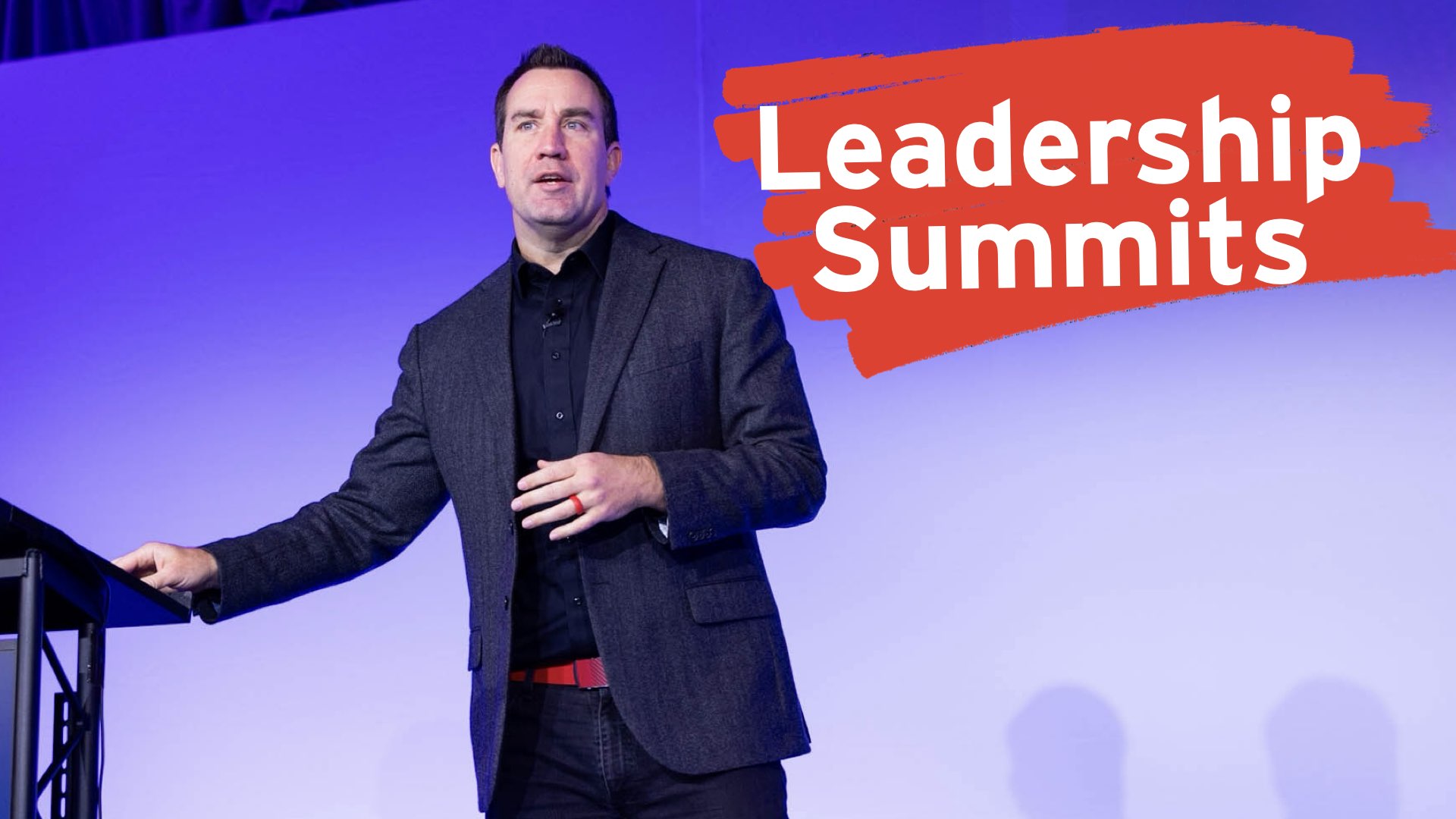
Most leadership summits fail before anyone sets foot in the room.
Not because of bad venues or cold coffee—but because of a gap between what these gatherings could produce and what they actually deliver. A leadership summit is one of the most significant investments an organization makes all year. The event pulls 150 or 200 of an organization’s most important leaders away from their teams, their markets, and their day-to-day responsibilities—often for two or three days. The travel alone costs a fortune. The opportunity cost is even higher. And yet, most organizations design these events the same way they always have: a sequence of executive presentations loosely connected by a theme, with some breakout sessions and a networking dinner mixed in. Leaders leave slightly more informed, marginally more connected—but rarely transformed.
And sadly, this has been going on for a long time. Even a decade ago, strategic offsite consultants Bob Frisch and Cary Greene documented this pattern and found that most organizations squander what should be their most powerful alignment tool of the year—their leadership summit. Information flows in only one direction. Attendees leave unclear about what they’re supposed to do differently. And a rare opportunity to harness the collective intelligence of the leadership team gets wasted.
The best leadership summits don’t just inform people. They transform how leaders think, connect, and operate—long after the event ends. And the difference between a summit that transforms and one that merely occupies time comes down to decisions made months before anyone walks through the door.
The Real Purpose Of A Leadership Summit
Before you book a single hotel room, you need to answer a question that most planners skip entirely: What specific outcome does this summit need to produce?
Not a theme. An outcome.
There’s a massive difference between “align our leadership team around the 2026 strategy” and “ensure every regional leader can articulate our three strategic priorities and explain how their team contributes to each one.” The first is a vague aspiration. The second is a measurable result you can actually design backward from.
As a keynote speaker at hundreds of past leadership summits, I’ve found that planners I’ve worked with think in terms of what leaders should be able to do after the summit that they couldn’t do before. Not just what they should know—but what they should do. That distinction changes everything about how you design the agenda, choose speakers, structure breakout sessions, and measure success.
Research on organizational alignment suggests that most performance problems aren’t actually strategy problems—they’re communication problems. Leaders at different levels of the organization are operating with different mental models of what the company is trying to accomplish and why. A well-designed leadership summit can close that gap in 48 hours. A poorly designed one just reinforces it.
Design The Experience Backward
Once you’ve defined your outcomes, design the entire summit in reverse. This is where most planners go wrong—they start with the agenda and fill slots. Instead, start with what you want leaders walking away with, and work backward to figure out what experiences will get them there.
If the outcome is strategic alignment, you need sessions where leaders don’t just hear the strategy—they wrestle with it. That means structured table discussions where cross-functional teams apply the strategy to real scenarios. It means live polling where the CEO can see in real time whether the room actually understands the priorities. It means giving leaders a chance to ask the questions they’re afraid to ask in front of their direct reports.
If the outcome is stronger cross-functional relationships, you need to engineer connection—not just hope it happens during cocktail hour. Research on team formation shows that trust develops fastest when people work together on a shared challenge, not when they make small talk over appetizers. Structure collaborative working sessions that force leaders from different functions to solve problems together.
If the outcome is behavior change, you need to go beyond inspiration. A keynote can shift how people think. But shifting how people act requires practice, application, and accountability structures that extend beyond the event itself.
Here’s my rule of thumb: for every hour of presentation, plan at least thirty minutes of structured discussion or application. If your agenda is twelve hours of content and zero hours of interaction, you don’t have a leadership summit—you have a really expensive webinar.
Build The Agenda Around Energy, Not Just Content
There’s a science to how people learn and engage in group settings—and it doesn’t follow a standard conference agenda.
Morning sessions are for heavy lifting. Cognitive capacity peaks in the first few hours. This is when you tackle strategic content, complex decisions, and challenging conversations. Don’t waste mornings on introductions and logistics.
Post-lunch is the danger zone. Every summit planner knows this, and most respond by scheduling an “energizing” activity or an inspiring speaker. But the real solution is structural—shorter sessions, more interaction, physical movement, and format changes. A 45-minute panel discussion will lose the room at 1:30 PM. A 20-minute keynote followed by 25 minutes of table discussion won’t.
Late afternoon is for connection and commitment. This is when leaders should be making commitments about what they’ll do differently, building relationships with peers they rarely see, and creating accountability partnerships for post-summit follow-through.
Evening events matter more than most planners realize. The informal conversations that happen over dinner often produce more alignment than the formal sessions. But they only work if the dinner experience is designed to encourage mixing—not just a buffet where everyone sits with the people they already know.
A well-designed summit agenda creates an arc—it builds, it challenges, it connects, and it sends leaders off with clear next steps. Think of it like a story, not a spreadsheet.
Choose A Keynote Speaker Who Does More Than Just Inspire
Let me be direct about this, because it’s where a lot of summit budgets get wasted: the right keynote speaker for a leadership summit is not a celebrity with a great story. It’s someone who can give your leaders a framework they’ll actually use.
Inspiration fades. Frameworks stick.
The best summit keynotes give leaders a shared language for talking about challenges they’ve been struggling with individually. When 150 leaders walk out of a session with a common vocabulary for trust, or collaboration, or leading through change—that shared language becomes a tool they use in meetings, one-on-ones, and strategy sessions for months afterward.
But even the best keynote can underperform if it’s delivered in the wrong format. The traditional model—a speaker delivers 60 minutes of energy and then disappears—can be memorable. But it rarely creates sustained change. In a recent article on leadership retreats, I described a format I call a “key-shop“—a blend of keynote and workshop—that works dramatically better in summit environments. Instead of a standard 60-minute talk, a 90- to 120-minute key-shop combines a high-energy keynote that creates shared language and urgency, followed by structured small-group discussion where leaders apply the ideas to their own real challenges. Clear prompts tie the conversation directly to the company’s strategic priorities.
This format does three things at once. It keeps energy high. It creates immediate relevance. And it ensures ideas are translated into action while leaders are still in the room together. For a summit of 150+ leaders, this is especially valuable—because the breakout discussions create the kind of cross-functional dialogue that plenary sessions alone can’t produce.
When evaluating potential keynote speakers for your leadership summit, ask these questions:
Can they customize? A speaker who delivers the same talk to every audience is a performer, not a partner. The best speakers will interview your senior leaders before the event, understand your specific challenges, and weave your context into their content.
Do they offer frameworks, not just stories? Stories are important—they make ideas stick. But a great keynote gives leaders something they can apply on Monday morning. Look for speakers who blend research, narrative, and practical takeaways.
Can they facilitate, not just present? This is the difference between a speaker and a key-shop partner. Can they lead the room through structured discussion? Can they adapt in real time based on what surfaces? A summit keynote isn’t a TED talk—it’s a catalyst for the conversations that follow.
Do they offer follow-up resources? The learning shouldn’t stop when the speaker leaves the stage. Look for speakers who provide post-event content—articles, videos, discussion guides—that help leaders keep applying what they learned and cascade it to their own teams.
Engineer The Room For Collaboration
This is tactical, but it matters enormously: how you set up the physical space determines whether your summit produces real dialogue or just polite applause.
Rounds of 8–10 people at tables beat theater-style seating every time for a leadership summit. Tables create natural discussion groups. They signal “you’re going to participate,” not “you’re going to listen.” They make it easy to shift between presentation and interaction without moving furniture.
Assign seats strategically. Left to their own devices, people will sit with their own teams—the people they already know and agree with. Mix functions, regions, and levels. Some of the most productive conversations happen between a VP of Operations and a VP of Marketing who’ve never had a reason to talk before.
Create “no devices” norms for key sessions. This is harder than it sounds—these are senior leaders with demanding jobs. But the research on multitasking is unambiguous: people who are half-present contribute half as much. Frame it as a sign of respect for the room, not a restriction.
And if you’re running a hybrid summit with some leaders joining virtually—invest heavily in the technology and facilitation to make remote participants feel like first-class citizens, not afterthoughts watching a livestream. This is harder and more expensive than most organizations expect, which is why many summit planners are wisely choosing to go fully in-person for their most important gatherings.
Don’t Skip The Pre-Work
The best leadership summits start weeks before the event itself.
Send attendees a brief pre-read—not a 50-page strategy document, but a focused 2–3 page summary that frames the key questions the summit will address. When leaders arrive already thinking about the core challenges, you can skip the “bringing everyone up to speed” portion of the agenda and jump straight into productive conversation.
Some organizations run a short pre-summit survey asking leaders about their biggest challenges, questions, and priorities. This serves double duty: it gives planners valuable data for agenda design, and it gives leaders a sense of ownership in the event. People engage more deeply with conversations they helped shape.
A pre-event webinar—no more than 30 minutes—can orient leaders to new frameworks, data, or strategic context that will be explored at the summit. One consumer goods company used this approach before a summit focused on digital transformation, providing a 25-minute briefing on their competitive landscape. The summit sessions that followed were dramatically more productive because leaders weren’t starting from zero.
Plan The Follow-Through Before The Summit Starts
Here’s where most leadership summits fall apart. The event ends on a high note. Leaders fly home energized. And within two weeks, the momentum evaporates—buried under the avalanche of emails, meetings, and quarterly priorities waiting for them.
The organizations that get real ROI from their summits build the follow-through into the event design itself. Before the summit ends, every leader should leave with three things:
A clear, specific commitment. Not “I’ll focus more on trust.” Something concrete: “I’ll hold a team discussion about our working norms within two weeks of returning.” Written down. Shared with an accountability partner.
An accountability partner. Pair leaders up—ideally with someone from a different function—and have them exchange commitments. Schedule a 15-minute check-in call for 30 days post-summit. This simple structure dramatically increases follow-through.
A post-summit resource. Whether it’s a summary document, a video library from the keynote sessions, or a discussion guide leaders can use with their own teams—give them tools to cascade what they learned. The best summits don’t just develop the leaders in the room. They equip those leaders to develop the people they lead.
Measure What Matters
Finally, move beyond the smiley-face feedback form. “How would you rate the summit on a scale of 1–5?” tells you whether people enjoyed themselves. It tells you almost nothing about whether the summit achieved its purpose.
Instead, measure against the specific outcomes you defined at the beginning. If the goal was strategic alignment, survey leaders 30 days later: “Can you name the company’s three strategic priorities? Can you explain how your team contributes to each?” If the goal was cross-functional collaboration, track whether leaders from different functions are actually connecting after the summit.
The best metric I’ve seen is the simplest: ask leaders’ direct reports whether they noticed a difference. When the people who weren’t at the summit can see a change in how their leaders communicate, prioritize, and collaborate—that’s when you know the summit actually worked.
A leadership summit is one of the few moments in the year when an organization’s most influential people are all in the same room at the same time. That’s an extraordinary opportunity—and an extraordinary responsibility. The difference between a summit that transforms and one that just fills time comes down to intentional design: clear outcomes, smart programming, the right speakers, and follow-through that extends the impact far beyond the event itself.
If you’re planning a leadership summit and want to explore how an evidence-based keynote on teamwork, trust, or collaboration could anchor your agenda, let’s talk.
About the author
David Burkus is an organizational psychologist, keynote speaker, and bestselling author of five books on leadership and teamwork.