By:

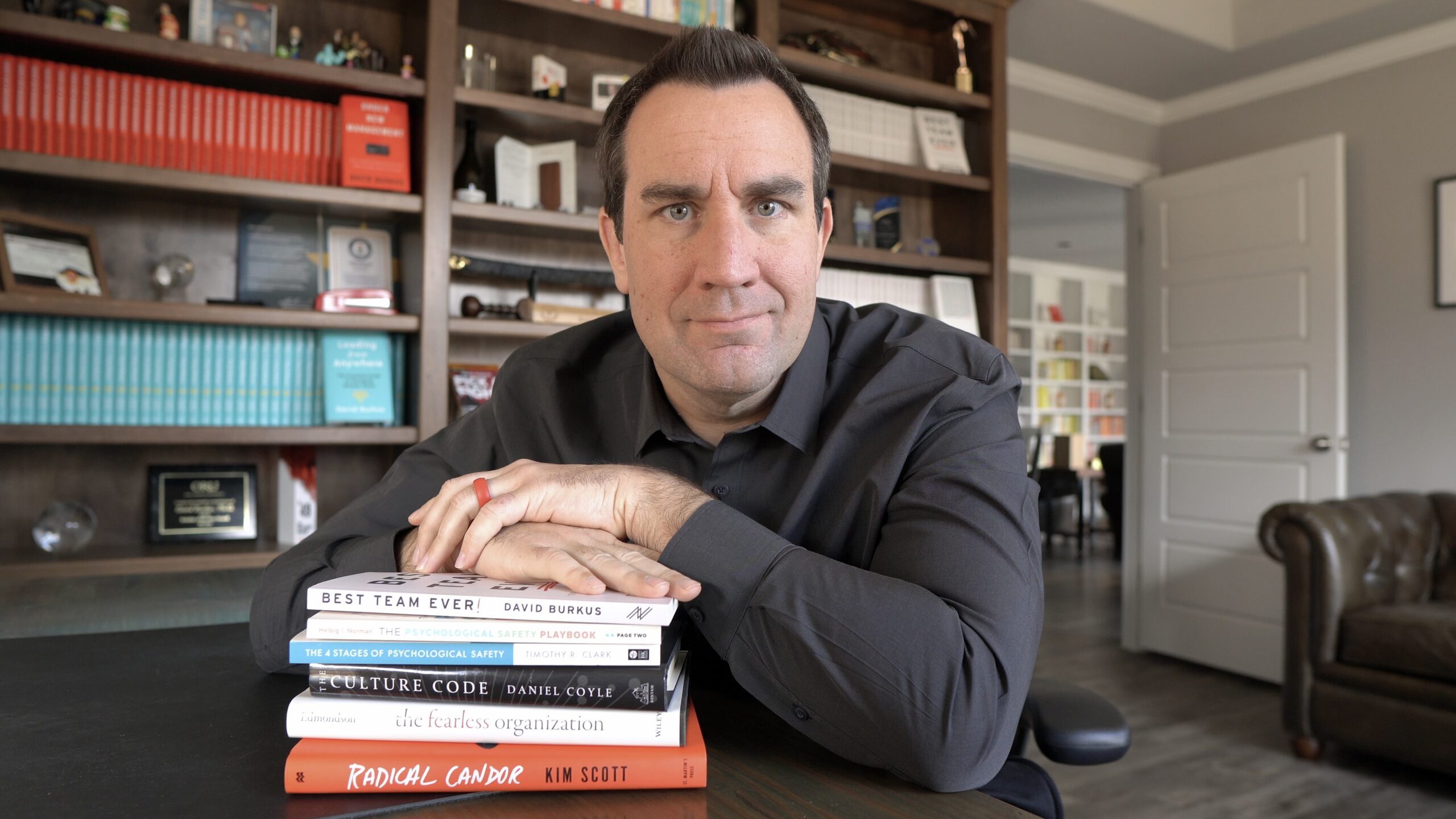
If you want a high-performing team, you need more than talent and goals—you need trust, respect, and the freedom to speak up.
In short: you need psychological safety.
But “psychological safety” isn’t just a buzzword. It’s a measurable, buildable part of team culture. And while plenty of articles mention it, only a few books really show you how to create it.
These six books on psychological safety go beyond the theory. They offer proven frameworks, stories, and habits that help leaders build teams where people feel safe to contribute, challenge, and grow. I’ve used and recommended every one of these—and they’ve all reshaped how I think about leading teams.
Best Books On Psychological Safety
1. The Fearless Organization by Amy Edmondson
This is the book that put psychological safety on the map. Edmondson’s groundbreaking research at Harvard revealed a powerful insight: the highest-performing teams aren’t the ones who make the fewest mistakes—they’re the ones who feel safe enough to admit and correct them.
In The Fearless Organization, Edmondson outlines why fear stifles innovation, learning, and engagement—and what leaders can do to replace fear with trust. She offers real-world case studies from healthcare, tech, and manufacturing that show the consequences (and opportunities) of psychological safety in action.
If you’re serious about building a culture where people speak up, take risks, and learn fast, this is one of the most foundational books on psychological safety you can read.
2. The Culture Code by Daniel Coyle
While not solely focused on psychological safety, The Culture Code is a masterclass in how great teams build trust, belonging, and cohesion. Coyle dives into high-performing organizations—everything from Navy SEAL teams to Pixar—and uncovers the small signals that create big impact.
One of the biggest takeaways: safety doesn’t come from sweeping policies. It comes from everyday behaviors—like listening closely, admitting your own weaknesses, and reacting supportively when people take risks. Coyle makes the invisible visible, helping leaders create micro-habits that reinforce team connection.
Among books on psychological safety, this one offers a behind-the-scenes look at the cultures that do it best—and the actions that make it stick.
3. Radical Candor by Kim Scott
Scott’s model—“Care Personally, Challenge Directly”—is a practical path to psychological safety. It shows that safety isn’t just about support; it’s also about truth. When people know their leaders care enough to challenge them—and are open to being challenged themselves—trust grows deeper.
Radical Candor is especially useful for teams that struggle with feedback. Scott warns against “ruinous empathy” (being nice to avoid conflict) and “obnoxious aggression” (feedback without care). She shows how to land in the sweet spot where honesty fuels growth.
While not branded as a book on psychological safety, this one earns its place on the list because it builds the conversational muscle that safety requires.
4. The 4 Stages of Psychological Safety by Timothy R. Clark
Clark’s framework explains how psychological safety develops in teams—step by step. He outlines four progressive stages:
- Inclusion Safety
- Learner Safety
- Contributor Safety
- Challenger Safety
This progression makes safety feel actionable. It helps leaders spot exactly where trust might be breaking down. Are people staying quiet in meetings? They might be stuck in Stage 2. Are good ideas going unspoken? You may need to work on Stage 4.
Among the best books on psychological safety, this one stands out for its clear roadmap and practical coaching cues. It’s not just “make people feel safe”—it’s “meet them where they are and help them grow.”
5. The Psychological Safety Playbook by Karolin Helbig & Minette Norman
Short, sharp, and deeply practical—this playbook offers 25 simple actions any leader can take to build psychological safety, today. From how to listen better to how to respond to failure with curiosity, each chapter delivers a punch of clarity.
This is one of my favorite hands-on books on psychological safety because it turns intention into execution. It’s ideal for managers, team leads, or HR professionals who want something they can apply in real meetings, conversations, and moments of tension.
The format makes it easy to revisit—whether you’re preparing for a tough 1:1 or trying to shift team culture one behavior at a time.
6. Best Team Ever by David Burkus
Yes, this is my book—and yes, I saved it for last.
Best Team Ever breaks down the surprising science behind high-performing teams into three elements: Common Understanding, Psychological Safety, and Prosocial Purpose. And while psychological safety is just one piece, it’s the one that makes the rest work.
What makes this book different from other books on psychological safety is the integration. Safety doesn’t exist in a vacuum—it interacts with clarity, empathy, and shared meaning. This book gives you the full picture of team performance and the habits that create it.
It’s research-based, practical, and written for busy leaders who want a clear path to building a better team—starting now.
Final Thought
Psychological safety isn’t a soft perk. It’s a performance multiplier. It unlocks candor, creativity, resilience, and speed. And when it’s missing, even the smartest people will hold back their best ideas, stay silent in moments that matter, or avoid the kind of friction that leads to breakthrough thinking.
The good news? Psychological safety is buildable. And the better news? You don’t have to guess how to build it. These books on psychological safety give you the tools, language, and habits to lead your team with more clarity and more trust.
Whether you’re starting from scratch, trying to turn around a toxic culture, or simply want to take a strong team to the next level, the resources on this list can help. Some give you research. Some give you frameworks. Some give you checklists. But all of them give you a way forward.
Pick one that resonates with your current challenge. Read it with your team in mind. Then start small—one meeting, one conversation, one act of curiosity at a time.
Because the best teams aren’t just smart. They’re safe enough to be honest. And that changes everything.
If you enjoyed this article, check out my other best book lists:
- The 14 Best Leadership Books That Actually Changed My Thinking
- The 8 Best Teamwork Books That Actually Improve Collaboration
- 7 Best Books on Trust That Actually Strengthen Teams
- The 5 Best Books on Change Management (That Actually Help You Lead Through It)

About the author
David Burkus is an organizational psychologist, keynote speaker, and bestselling author of five books on leadership and teamwork.